
Mountain Lion is the latest OS X which is available to purchase and has access to download from the App Store. Mountain Lion is available in the format of digital download in the Mac App Store and not available on a disc. The installer size measures approximately 4.05 GB and can easily create a bootable USB installer drive for Mountain Lion. There are several Macs from which users can install at no additional charges. But, if you have never upgraded your Mac or any older version of Mountain Lion you still have the option to purchase the license for Mountain Lion as Apple lets you purchase Lion OS X 10.7, Snow Leopard OS X 10.6, and Mountain Lion (OS X 10.8).
With quite 65 million users—consumers, scientists, animators, developers, system administrators, and more—OS X is the most generally used UNIX® desktop operating system. Tight integration with hardware—from the sleek MacBook Air to the powerful Mac Pro—makes OS X the platform of choice for an emerging generation of power users.
Mac OS X Lion (version 10.7) is the eighth major release of Mac OS X (now named macOS), Apple's desktop and server operating system for Macintosh computers. A preview of Mac OS X 10.7 Lion was publicly shown at the 'Back to the Mac' Apple Special Event on October 20, 2010. It brought many developments made in Apple's iOS, such as an easily navigable display of installed applications, to the. Apple Mac OS X Lion is now available to general public. The Mac OS X 10.7 Lion is available for installation only from the Mac App Store. This guide will teach you how to create a bootable USB Flash drive of Mac OS X Lion 10.7 and install Lion from USB, rather than downloading it from Mac App Store on each and every Mac computer you own. You can move Mac OS X Lion files and folders arou. Operating Systems. Copy, Move, Rename, and Delete Files with UNIX. How to Use Basic UNIX Commands to Work in Terminal on Your Mac. If you’re working in Terminal on your Mac, you need to know the most.
The OS X kernel is predicated on FreeBSD and Mach 3.0 and features an extensible architecture supported well-defined kernel programming interfaces (KPIs). OS X was the primary OS to ship as one install that would boot into either a 32-bit or 64-bit kernel, either of which could run 32-bit and 64-bit applications at the full native performance. Starting with a cougar, OS X exclusively uses a 64-bit kernel, but it continues to run both 32-bit and 64-bit applications.
After the user receives a license, the user gets a notification of redemption code from Apple.
Mountain Lion OS X 10.8 is one of the greatest operating systems from Apple. This version supports video conversion applications and runs at a rapid pace compared to others.
The user can run the installer from the older version or upgrade it too. But there are different kinds of reasons users might require to create a bootable installer.
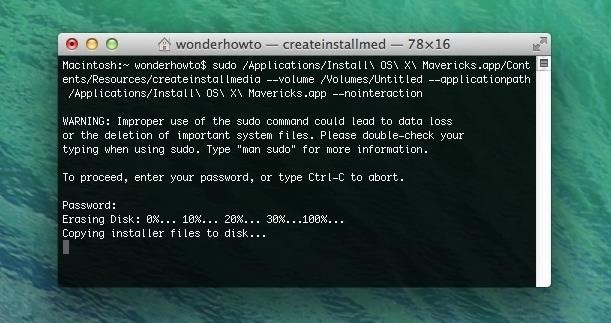
Following is the list to how to create a bootable USB installer drive for Mountain Lion:

The user copy of Mountain Lion is installed on as many Macs you want at no additional cost. To install multiple Macs, a bootable USB installer is more scalable as compared to downloading on every individual computer. The user can also make your own bootable USB installer disk before any upgrades. If the user’s Mac is damaged or has any corrupt errors in the operating system. Moreover, it doesn’t allow you to boot then the user will never get a faster internet connection.
To create a bootable Mountain Lion USB installer disk, the user is required to get a copy of the installation file of Mountain Lion. If a user’s Mac runs on a previous version, the user can download it from the app store. Else, if a user has never experienced downloading then it needs to be purchased the license code for Mountain Lion and redeem it. Moreover, the user can also borrow from friends or colleagues to create the same file.

Make the OS X cougar Install Drive
- Launch Disk Utility and connect a USB drive to the Mac
- Select the USB drive from the left menu and click on on “Erase” tab, choose “Mac OS X Extended (Journaled)” because the format, then click on the “Erase” button within the corner
- Now select the formatted USB drive from the left side and click on on the “Restore” tab
- Drag the previously mounted “Mac OS X Install ESD” image into the “Source” section
- Drag the formatted partition to the “Destination” section, then click on “Restore”
Confirm that the USB drive will lose its data and enter the Admin password when asked
Disk Utility will now create a bootable OS X cougar installer drive out of USB drive using the disk image, this will take a touch while counting on how briskly the drive and Mac are but 20-30 minutes isn’t unusual.
How to Clean Install Mac OS X Mountain Lion 10.8 using USB
You can clean install Mac OS X Mountain Lion 10.8 using USB by accessing the link below. Also, make sure that you have enough back up before you proceed with the same. There are a lot of duplicate ISO images on the market and it is best to download the same from a trusted source.
On every OS X Lion installation a hidden partition is created to enable a method for Lion to be reinstalled on the machine, it is known as the recovery partition or drive and is 650mb in size.
If you bought a new machine from Apple you have OS X 10.7 already installed – but no back up disk! and since you haven’t bought the OSX Lion 10.7 App from the App store you can’t re-download it – so thats why you have the recovery drive as a partition in your main hard drive and to boot from it you need to restart the machine holding down “command” + “r” keys.
From recovery mode you can run Disk Utility, get online help and do a restore from a Time Machine backup and re-install Lion leaving all your other files intact – it just replaces the core operating system.
You can make a bootable USB drive or disk of the recovery drive, but involves a small trip to the Terminal….
1) Launch Terminal from /Applications/Utilities and run:
The primary drive in this list is No.2 with the “Identifier” of disk0s2, the boot recovery drive is disk0s3
We can also identify the recovery drive by the name and the size – set at 650mb
What Is Terminal On Mac
2) Mount the drive:
Output should be:
Now the Recovery HD is mounted in the Finder and you can see it in the sidebar under Devices
Navigate to it from the sidebar – Recovery HD/com.apple.recovery.boot/BaseSystem.dmg.
3) Doubleclick BaseSystem.dmg to mount it also in the sidebar. This will mount the volume ” Mac OSX Base System”
mac-osx-lion-base-system
4) Open Disk Utility in /Applications/Utilities Adobe professional for mac os x.
5) Put in a 2GB+ USB drive, let Disk Utility load it. The USB drive needs to be formatted as Mac OS Extended Journaled, if its not, its time to format it in Disk Utility…
6) Finally in still in Disk Utility, select the “Restore” tab – drag the mounted volume “Mac OSX Base System” into the Source field and drag the USB drive “Volume” (mine is called SuperBootUSBDrive) to the Destination.
restore-volume-osx-usb
7) Click Restore – 25 minutes later – One bootable USB drive
Your bootable USB drive will be called “Mac OS X Base System” after the restore is complete. Now to boot from it just select it as the Start Up disk in System Preferences or hold down option key on boot and select it from the choice of bootable devices.

If you have downloaded the Lion App from the App Store then you can also make a boot disk/drive from this, guide is here, you need to make the boot drive/disk before you install the Lion App, as the installer is deleted after running it. Thats why the guide here can get you out of trouble.
Couple of footnotes on this – Apple has released a knowledgebase article about the recovery partition, also just released from Apple is an app that will do the same as above.
Update For Newer Models – hidden BaseSystem.dmg
If you have the latest models from Apple that came already shipped with OSX 10.7, then you may not have the “BaseSystem.dmg” but instead see a “BaseSystem.chunklist” , the “BaseSystem.dmg” is there it’s just hidden.
Os X Terminal Commands List
To show it so you can see it in the finder – go to Terminal – enter:
C# regex patterns. IEEE 802-2014 actually specifies hyphens for ordinary MAC addresses (§ 8.1 ¶ 3) and colons for the obsolescent bit-reversed notation (¶ 4). Importantly, in practice, no one observes this. We simply use one or the other, but never mix them in a single written MAC. – pilcrow Jul 14 '15 at 17:06.
Mac Os X Lion Terminal Commands List
Now it will be visible in the Finder.